How to effectively treat ornamental fish diseases at home using garlic and methylene blue
Do you want to know a simple, effective way to treat ornamental fish diseases at home? Share tips for caring, preventing, and treating ornamental fish diseases using only safe natural methods.
Do you want to know simple, effective ways to treat ornamental fish diseases at home? Share tips for caring, preventing, and treating ornamental fish diseases using only safe, natural methods.
My First Aquarium and a Painful Lesson – From 'Disaster' to a Reluctant 'Expert'
Just raw garlic and methylene blue solve all cloudy water and weak fish problems neatly
Looking back, it's both laughable and... stupid! Back then, about a decade ago, I had just graduated, earning a meager salary, and saw people keeping beautiful ornamental fish, so I got hooked too. I wandered to the market, brought home a cheap Chinese glass tank, a few inexpensive 'three-tailed' goldfish, some colorful gravel, and eagerly poured tap water directly in and released the fish. Oh boy, needless to say, three days later, the whole school 'belly up' surrendered! The water was murky, the smell was... oh dear! At that time, I only knew to go on early forums like Arowana, ABV (probably few remember now) to ask around. Some said lack of oxygen, others said bad water, some claimed the fish were inherently weak. I was like a chicken with its head caught, trying all sorts of things, from stronger air pumps, constantly changing water (still with tap water), to buying dubious 'three-penny' bottles from the shop. The result? The next tank was even more disastrous than the first.
Honestly, there were times I was so frustrated, I thought about quitting, selling the tank to be free of the burden. But the 'stubborn, competitive' blood of a man rose up. 'Can't I even handle these tiny fish?' So I diligently read, asked, and explored. From street vendors selling fish on the sidewalk with thick old Hanoi accents saying 'you gotta sun the water, let that western smell evaporate first,' to experienced 'masters' on forums back then patiently teaching every detail. I realized my most fundamental mistake, and also that of many new hobbyists, was underestimating the IMPORTANCE OF WATER.
That was my first major fall, painful but worth it! It taught me that keeping fish isn't just about buying fish and releasing them; it's an art, a science, and sometimes, even a bit of 'spirituality'! (Laughs).
Related Posts
Comments
Portrait of the Vietnamese Ornamental Fish Community – 'Brothers from all corners, fish is the conversation starter'
Talking about Vietnamese ornamental fish hobbyists, you have to use the word passion. And this passion comes in countless forms. Some love Arowana for its majestic, feng shui aura. Others prefer Koi for its elegance and tranquility. Young people favor Guppies, Bettas for their vibrant colors, ease of breeding, and student-friendly budgets. Then there's a whole 'aquascaping school,' obsessed with lush green tank layouts, meticulous about every branch and blade of grass.
The culture of sharing joys and sorrows and the little-known dark corners
What's great about our community is the high spirit of sharing. Just go to large groups like 'Vietnam Ornamental Fish Association,' 'Sharing Passion for Ornamental Fish Nationwide,' 'Hanoi Aquarium and Aquascaping Forum,' 'Ho Chi Minh City Ornamental Fish Club,'... and post a question, and you're sure to get dozens of 'experts' offering guidance. From setting up tanks, choosing fish, feeding, to disease prevention and treatment, almost nothing is missing. Honestly, I often learned great tips from coffee 'chats' with brothers in the club, or seemingly casual but profound comments online.
I remember once my beloved Flowerhorn suddenly stopped eating, lay at the bottom, and I panicked and asked on a group. A guy all the way in Ca Mau stayed up all night messaging me step-by-step instructions, from how to change water, what medicine to use, the dosage. After saving the fish, I was overjoyed, could only thank him profusely. Truly, the 'brotherhood' in fishkeeping is special like that.
However, alongside the good things, there are also 'dark corners.' Like the issue of 'fake, counterfeit medicine' sneaking in. Or online shops selling sick, defective fish and then disappearing. Then there's price undercutting, dirty tricks between fish shops. Occasionally, on large groups, there's this or that 'scandal,' brothers joining to 'gossip' is fun, but also sad about how things are. I once got burned buying a batch of imported fry where the seller 'hid' the disease, and within a few days at home, the whole school 'went belly up.' At that time, I felt sorry for the fish and was angry, but it was also a lesson to be more careful later.
Word-of-mouth tips and tricks – 'Secret techniques' or just 'harmful rumors'?
In the fishkeeping world, countless tips are passed around. Like using dried Indian almond leaves to condition fish, lower pH. Or putting a bit of coarse salt in the tank to disinfect. Then feeding egg yolk to enhance color... Many of these are valuable experiences summarized from practice. However, not a few 'secrets' are just rumors, even harmful to fish if applied incorrectly.
For example, the salt thing. Salt does have disinfecting properties, reduces stress in fish, but using too much, especially in planted tanks, becomes a 'disaster.' Or Indian almond leaves, very good for fish like Bettas, Flowerhorns, but you must know how to process the leaves cleanly, or you'll invite more pathogens into the tank. A friend in Dong Nai confided: 'When I first started, I heard people suggest putting Indian almond leaves in to make betta fish vigorous, who knew I threw a whole fresh leaf in, a few days later the water turned yellowish, the fish became lethargic, man.'
So, my experience is, you must research everything well, 'consult' many opinions, then 'experiment' on a small scale before applying widely. Don't hastily follow everything you hear, lest 'the harm outweighs the benefit.'
Tap Water – The 'Hidden Enemy' and the persistent headache for fish hobbyists across regions
Here, the eternal problem that any newbie is most likely to 'get hit' by. Many people think tap water is clean already, just use it as is. But the truth is harsh, brothers.
The reality of using tap water and 'the foretold death'
Not exaggerating, tap water in many places, especially big cities like Hanoi, Ho Chi Minh City, Da Nang, contains very high levels of Chlorine and sometimes Chloramine. These are used to disinfect domestic water, but are 'Grade A poison' for ornamental fish. Chlorine damages fish gills, causes suffocation, stress, slime coat loss, and susceptibility to disease. Chloramine is even more dangerous because it's more stable than Chlorine, harder to evaporate.
Confiding with you all, back in the day when I was still 'clueless,' every time I changed water, it was certain that a few days later a few 'guys' would become lethargic and then 'pass away without saying goodbye.' At that time, I lived in Thu Duc area (HCMC), the tap water there was famous for its strong Chlorine smell. Turning on the tap, the smell rushed right up your nose. After changing water, the fish initially swam happily, but after a while started clamping fins, lying at the bottom, or rubbing against the tank walls, rocks. Heartbreaking!
Brothers in different regions face similar problems. A friend on a Northern ornamental fish forum once shared: 'I'm in Hai Phong, the tap water where I am, whenever it rains a lot, always has a fishy smell, changing it in, the fish often get fungus, folks. Sunning it for days doesn't help.' Or a post from a member in Da Nang: 'I don't know why my tap water lately has a film, pumping it into the tank, the fish clearly look uncomfortable. Probably have to invest in an RO filter system.'
Traditional ways to 'treat' tap water – How effective are they?
We fish hobbyists don't give up easily. The elders in the old days had the trick of sunning water. That is, drawing tap water into buckets, basins, leaving it for a few days for Chlorine to evaporate. This method is somewhat effective for Chlorine, but almost useless for Chloramine. Moreover, sunning water is cumbersome, takes up space, especially for brothers in cramped townhouses. Not to mention, if not careful, dust, mosquito larvae fall in, it becomes 'inviting trouble.'
Some brothers use commercially available Chlorine-removing chemicals. These usually contain Thiosulfate, reacting quickly with Chlorine. Convenient, but adds an extra cost. And honestly, not all are 'good quality,' many 'fake' ones make the fish even more 'dazed' if used. I once heard a friend in Cho Lon (HCMC) complain: 'Bought some Chinese Chlorine remover bottle, adding it in, the water felt slimy, the fish swam like they were drugged, got scared and dumped it all out.'
Then there's boiling water and letting it cool. This method removes Chlorine, but also removes all dissolved oxygen, changes some minerals. Putting fish in isn't good either.
In short, the old methods still have certain limitations, especially in the context of increasingly problematic tap water quality. Therefore, finding safe, effective, yet economical solutions is always our 'worry.'
Decoding the miracle cure raw garlic – Folk remedy and stories that are both laughable and tearful
Among countless folk 'secrets,' garlic is one of the most mentioned for preventing and treating ornamental fish diseases. I myself have had many 'memorable' experiences with this garlic bulb.
From 'overhearing' to being addicted to garlic – The discovery journey of an old fishkeeper
The first time I heard about garlic's benefits was from an experienced Flowerhorn keeper brother in District 8, Saigon. He said: 'You just try crushing a few garlic cloves, squeeze out the juice, mix it into the fish food. Guaranteed the fish will be healthier, get fewer minor illnesses, and their digestion will be much better.' At that time, I was very skeptical, thinking garlic is so spicy, how can fish eat it. But seeing his tank, every fish had a head like a coconut shell, bright pearls, swimming happily, I got curious and tried it.
Initially, I only dared use a very small amount. Indeed, the fish seemed more 'reluctant' to eat than usual. But after a few times getting used to the smell, they 'finished' it cleanly. And surprisingly, my fragile guppies after that period had much less white fungus disease, and their digestion stabilized. From then on, I started 'researching' garlic more deeply.
Let me tell you a funny story. Back then, there was a younger brother in the ornamental fish club in Go Vap, just starting to keep goldfish. Hearing me say garlic is good, the guy went home 'enthusiastically' crushed a whole large garlic bulb, squeezed all the juice into his 50-liter tank. The next morning he called me with a tearful voice: 'Bro, help! Why are my fish all lethargic, floating to the surface?' I asked and found out the situation. Truly 'enthusiasm plus ignorance equals destruction'! Had to guide him to do an emergency water change, strong aeration, luckily saved almost the whole school. That was a lesson about dosage, anything 'too much' is not good.
Then there's a lady all the way in Binh Duong, keeping Koi in a cement pond. She said, every rainy season, the fish would get red spots, ulcers. She tried all sorts of medicines to no avail. After I shared the method of using garlic soak, she persistently applied it. Crush garlic, soak in clean water overnight, then take that water and sprinkle it evenly into the pond. The result was, in the next few rainy seasons, her fish were healthy, and their colors even became more beautiful. She kept praising 'your secret technique is so effective!' Hearing that warmed my heart.
Deep analysis of personal and group experiences – Garlic: miracle cure or just seasoning?
After many years of tinkering, experimenting, and gathering experiences from brothers, I conclude this:
Main benefits of garlic
Mild antibacterial and antifungal properties: Garlic contains Allicin, a sulfur compound that can inhibit some common bacteria and fungi that cause diseases in fish. It's like a gentle natural antibiotic.Stimulates digestion: The smell and taste of garlic (in appropriate doses) can stimulate fish to eat more eagerly, aid digestion, and help fish absorb nutrients better. Those of you who keep Arowana or Flowerhorn fish probably already know the trick of mixing garlic into beef heart or shrimp for feeding, right?
Boosts immunity (conditionally): Some studies (and practical experience) show that garlic helps fish increase resistance, but it is not a "cure-all" miracle drug. It only works best when combined with clean water and a proper nutritional regimen.
Misconceptions about garlic:Garlic can cure all diseases: Totally wrong! Garlic only helps prevent and treat some mild diseases, mainly those caused by bacteria, external fungi, or early-stage intestinal issues. For severe diseases caused by stubborn viruses, parasites, or when fish are already weakened, garlic is almost ineffective and can even cause more stress.
The more garlic, the better: Like the story of my friend in Go Vap I mentioned above, overdosing on garlic can shock fish, cause gill burns, and strip their slime coat. Small or weak fish are even more sensitive.
Garlic water can replace specific medication: Never! When fish are seriously ill, proper diagnosis and specific medication as directed are needed. Garlic should only be seen as a supportive, preventive measure or used during the recovery phase.
In hobbyist groups, using garlic also causes a lot of debate. Some people "worship" garlic as a "savior," while others "look down" on it, thinking it's just a spice and doesn't do much. In my opinion, both extremes are not entirely correct. The key is to understand its true nature and know how to use it properly. As the saying goes, 'speak with evidence, advise with proof.' Personally, I've found that using garlic correctly significantly reduces the need for chemical medications, and fish become healthier more naturally.
Methylene Blue – A Familiar Savior or a Double-Edged Sword?
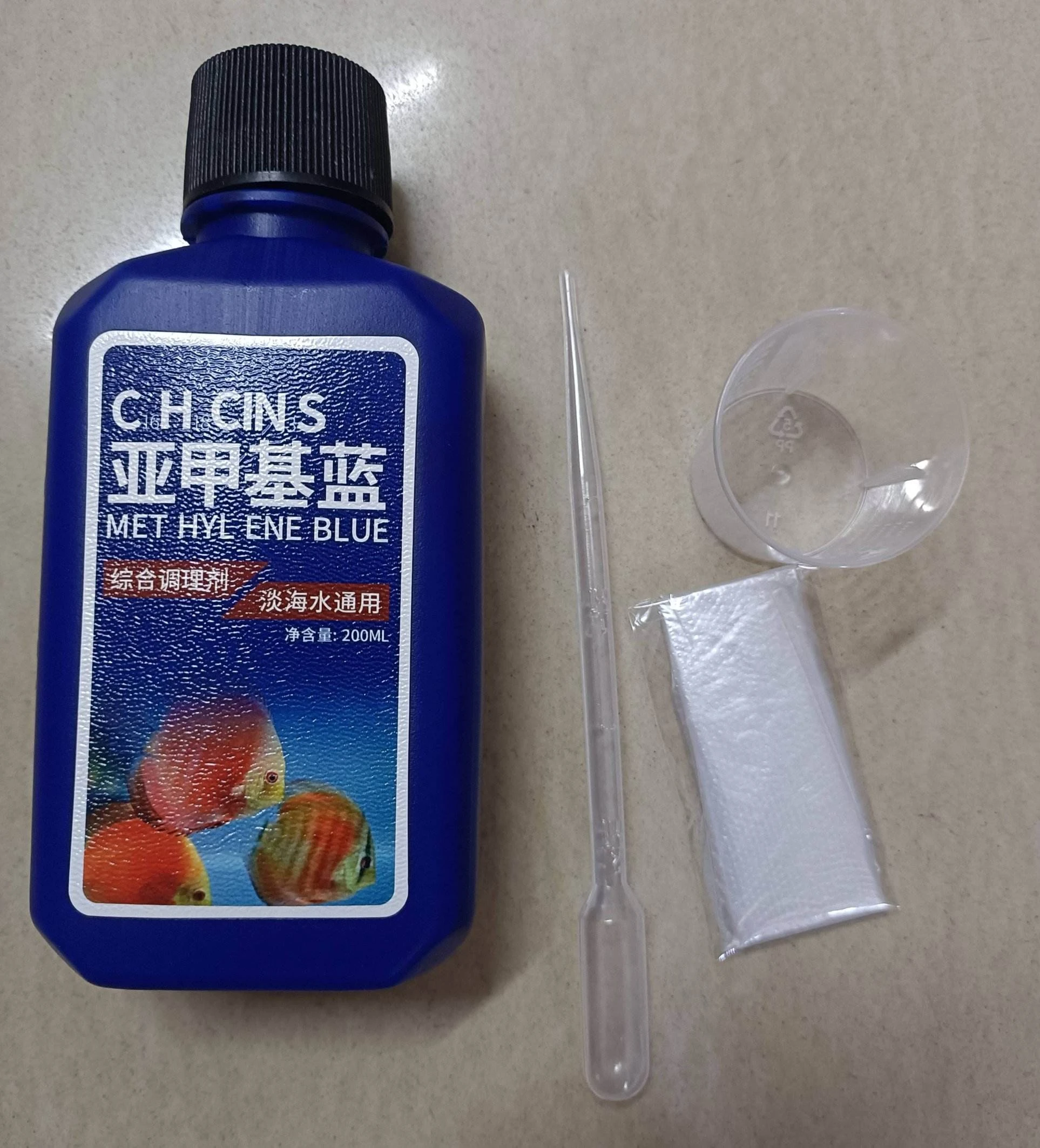
If garlic is a secret weapon from the kitchen, then Methylene Blue (or what we often call 'blue medicine,' 'Met blue') is a familiar face in the medicine cabinet of most aquarium hobbyists. This little blue bottle is almost a rite of passage for anyone stepping onto this "painful" path.
Blood, Sweat, and Tears with Methylene Blue – When the "Miracle Drug" Turns Poisonous
It's rare to find a fish keeper who has never used Methylene Blue. It's cheap, easy to buy, and seems versatile. Its main uses are mild disinfection, treating external fungi (white fungus, water mold), and treating some diseases caused by protozoa. Sounds great, right?
I remember when I was new to the hobby, any strange behavior from the fish and I'd "hit" them with Methylene Blue. A fish got its fin torn by another? Methylene Blue. Newly purchased fish? Methylene Blue bath. Water slightly cloudy? A few drops of Methylene Blue for peace of mind. The consequence was that sometimes, fish didn't die from disease but from... Methylene Blue poisoning! Damaged gills, the whole fish turning blue, refusing to eat, lethargic. It was like making a healthy pig lame.
In hobby groups, stories of Methylene Blue abuse are not uncommon. One guy joked: "The other day I was away on business for a few days, told my wife at home that if she saw anything unusual with the fish, to add a few drops of the blue medicine. When I got back, the whole tank looked like... the Mekong River during an ink spill, and the fish were gasping. Asked her, and she said she saw a few fish rubbing themselves, thought they must be itchy, so she put in half a bottle for them to... have a good soak!" It's laughable yet sad. That's the common situation for many hobbyists who don't fully understand the dosage and side effects of this medication.
The Great Debate – When Methylene Blue is a Hot Topic in the Community
Methylene Blue, though common, is still a topic of much controversy.
The Supporters: Believe Methylene Blue is cheap, effective for common external diseases, easy to use, and especially useful for disinfecting during fish transport or quarantining new fish. They often have experience using moderate doses with good results. A friend who sells guppies in Ha Dong (Hanoi) shared: "I still think Met Blue is the best for quarantining newly imported fish. Prevention is better than cure; just a quick bath for them gives much more peace of mind."
The Opponents or Cautious Ones: Believe Methylene Blue has high toxicity if used incorrectly, can easily damage fish gills, affect beneficial bacteria in the tank, and especially "ruin" aquascape layouts (turning plants and rocks blue). Many aquascaping "masters" almost never touch Methylene Blue. They prefer more natural methods or specialized medications with fewer side effects. A "storm-causing" post on a forum a few years ago, where an "expert" deeply analyzed the harm of Methylene Blue abuse on the bacterial colony, left many hobbyists wide-eyed.
My take is, Methylene Blue isn't bad, but it's like a knife. Used correctly, it's useful; used wrongly, you'll "cut your hand" easily. The important thing is to know:
Dosage: This is the key factor. Typically, use only 1-2 drops per 10-20 liters of water for prevention or mild treatment. For fish baths, the concentration can be higher but the time must be short.
Purpose of Use: It's fine for treating fungus and external bacterial disinfection. But don't expect it to cure internal parasites or viral diseases.
Impact on Beneficial Bacteria: Methylene Blue kills bacteria indiscriminately. Using it in the main tank can kill beneficial bacteria, cause cloudy water, and crash the cycle. It's best to move fish to a separate treatment tank.
Not for Planted Tanks with Valuable Plants: Unless you want to dye your entire underwater garden blue.
So, understanding Methylene Blue correctly is extremely important. Don't treat it as a "miracle cure," but don't shun it completely either.
The Intersection of Two Secrets – The Challenging Journey and Unexpected Sweet Results of "Forcing a Marriage" Between Garlic and Methylene Blue
After a long time "eating onions" (suffering) with all sorts of fish diseases, then tinkering with garlic and Methylene Blue separately, a somewhat "crazy" thought suddenly flashed in my mind: "Why not try combining these two?" Garlic has natural antibacterial properties, Methylene Blue is strong against fungus. Maybe "two swords joining forces" could create something interesting?
From a "Crazy" Idea to "Up the Bank, Down the Field" Experiments
Thought and action, but it's not as simple as just mixing them. I started by researching whether these two "clash," if they create something toxic when combined. At that time, online information was limited, mostly foreign forums, and my English was "so-so." Well, "nothing ventured, nothing gained."
Initially, I experimented on a few cheap feeder fish. The first time, I crushed garlic, squeezed out the juice, added a few drops of Methylene Blue, mixed them, and added it to a tank with fish suffering from mild fungus. Result: The fish seemed more uncomfortable, some even stopped eating. I thought: "Oh no, they must be shocked by the garlic smell and medicine."
Then I adjusted. Reduced the garlic amount, reduced the Methylene Blue. Still not very promising. Once, an older brother in the group saw me struggling and "lovingly scolded": "You have too much free time, huh, concocting medicine! Just follow the books and do it properly." It stung a bit, but my curiosity is huge.
After many failures, changing ratios and soaking methods, I realized something: Fresh garlic juice directly seems a bit harsh when immediately combined with Methylene Blue and applied to fish. Perhaps a process of neutralization or gentler extraction was needed.
The "True Love" Appears – Surprising Effectiveness from a No-Need-to-Adjust Formula (Personal Version)
I remembered how our elders used to soak garlic in alcohol to drink. So I tried soaking crushed (or sliced) garlic in clean water for a specific time (about 12-24 hours) to let the active compounds in garlic diffuse slowly into the water. Then, I used that garlic-infused water, diluted it further, and only then combined it with an appropriate amount of Methylene Blue.
And... boom! Magic happened!
That time, I had a guppy tank with quite severe fungus, and using Methylene Blue alone hadn't shown much improvement. I decided to go big, applying the new formula: Garlic-infused water + Methylene Blue (with carefully adjusted dosage). After about 3 days, the fungal spots started to decrease noticeably. The fish became more active, started eating again. About a week later, they were almost disease-free! I was overjoyed!
I started applying it more widely to my other home tanks, then shared it with a few close friends in the group. The feedback was very positive. The beauty of this combination, from my observation and feeling:
Garlic (extract/infused water): Plays a role in mild antibacterial support, stimulating immunity, helping fish increase internal resistance. The smell of garlic (when soaked and diluted) also helps repel some small external parasites.
Methylene Blue: Still the main player in killing fungus and surface bacteria.
The Combination: Seems to create a synergistic effect. The garlic extract helps pave the way, weakening pathogens, allowing Methylene Blue to work more effectively without needing as high a dose as before. This helps minimize the side effects of Methylene Blue on fish and the bacterial colony.
A Small Comparison Before and After Applying the "Holy Combo":
Criteria
Using Methylene Blue Alone
Using Combo: Garlic Infusion + Methylene Blue (adjusted formula)
Fungus Treatment Effectiveness
Average, sometimes slow, fish prone to relapse if environment isn't good
Fish can get stressed if dose is slightly high or prolonged
Less stress due to typically lower Methylene Blue dose
Impact on Beneficial Bacteria
High if used directly in main tank
Less impact if used for prevention, but still be cautious
Post-Illness Recovery
Average
Faster, fish seem healthier thanks to garlic's effects
Cost
Quite cheap
Still very cheap, garlic is something every household has
Of course, this is personal experience and feedback from friends. It's not a rigorously verified scientific study. But for hands-on fish keepers like us, whatever is effective, safe, and economical is what we use, right? "Tasty, healthy, cheap" is the top criterion!
Step-by-Step "Hand-Holding" Guide – The Secret Recipe for Using Garlic and Methylene Blue for Your Beloved Aquarium from A to Z
Alright, here's the most important part. After so much pain, so many tank crashes (both literally and figuratively), I've distilled a relatively standard procedure so you can confidently apply it. Remember, this is how I usually do it, it might differ a bit from other "masters," so just use it as a reference and adjust to your own conditions. Writing this is like I'm sitting next to you, showing a close friend how to do it, so it's a bit "down-to-earth," please bear with me.
Preparing the Gear – Simple as a Joke!
Nothing fancy needed, all easy-to-find stuff:
Garlic: Choose small, fragrant local garlic if possible. Ly Son garlic is top-notch, but regular garlic is fine too, as long as it's not spoiled or moldy. About 2-3 medium cloves for one batch of solution to use gradually.Methylene Blue: Buy the type for aquarium use from reputable fish stores. Pay attention to the expiration date, folks. A small bottle lasts a whole year.
Clean Water: Super important, folks! Use tap water that has been dechlorinated (aired, aerated, or treated with a dechlorinator). Best is water already stabilized in a running filter tank.Small Mortar and Pestle (or clean knife, cutting board): To crush or mince the garlic.Clean glass or plastic jar/bottle with lid: To soak the garlic and store the finished solution. Dark glass is preferred.Filter cloth or small sieve: To filter out garlic pulp.
Pipette or small syringe with ml markings: To accurately measure Methylene Blue and garlic solution. Precise to the drop, folks!
Steps to Prepare the Miracle Potion – Meticulous in Every Step
It looks complicated, but it's not. After doing it a few times, you'll get the hang of it.
Preparing the Garlic: Peel 2-3 cloves of garlic. If you're meticulous, give them a quick rinse to clean off any dirt. Crush or mince them very finely. My experience is that crushing releases more garlic essential oil. Don't crush them into a pulp or juice, just a good crush is enough.
A note from experience: Back then, I was too eager and crushed a whole handful of garlic, planning to use it for a whole week. Who knew the garlic water would ferment if left too long, producing a horrific smell, and the fish would avoid it like the plague. So, make just enough to use in 1-2 days.
Soaking the Garlic – The Secret Lies Here:
Put the crushed garlic into a clean jar. Pour in about 100ml – 200ml of prepared clean water. This amount of water is up to you to gauge, the main purpose is to extract the garlic. I often use a small 330ml mineral water bottle, put the garlic in, and fill it halfway with water.
Close the lid, shake gently, and place it in a cool, ventilated spot, avoiding direct sunlight. Soaking time: About 12 – 24 hours. Personally, I find soaking overnight (about 12 hours) is fine. Soaking too long, the water can easily become "spoiled" or the garlic smell becomes too strong. A small confession: Once I completely forgot about it and left it for 2 days. When I opened it, the garlic smell "shot up to the roof". Luckily, I hadn't used it yet.
Preparing the Garlic – Methylene Blue Solution (Base Solution):
After soaking for the required time, filter out the garlic water, discarding the pulp. You can use a fine cloth or a small tea strainer to filter thoroughly, avoiding garlic sediment getting into the tank and clouding the water.
Now comes the important part:
Methylene Blue Ratio. For about 100ml of filtered garlic extract, I usually add 1 to 3 drops of concentrated Methylene Blue (the 1% type bought at fish stores). Start with 1 drop for safety. If your fish get used to it or you need to treat a slightly more serious condition, you can increase gradually. Absolutely do not be "greedy" and add too much! Stir gently to mix the solution evenly. At this point, the water will have the light blue color of Methylene Blue and a faint, pleasant garlic aroma (not as pungent as when freshly crushed). This is my "base solution".
"Prescribing" Usage – Dosage and Method for Each "Condition"
This is where experience and observation are most needed. There's no fixed formula for every type of fish or every tank size. But I'll give some suggestions based on what I've successfully applied.
Regular Disease Prevention (Most Important!):
Dosage: Use 1ml – 2ml of the base solution (prepared above) per 10 liters of tank water.
Frequency: Once every 1-2 weeks, best after a water change.
Method: Dilute this base solution with a little water from the fish tank, then pour it slowly into the filter compartment (if available) or spread it evenly across the tank surface.
A message from a friend in Saigon: "Ever since you told me about this method, I always add a little after my weekend water change. Touch wood, for a whole year now, my school of discus hasn't had any fungus or raised scales or anything. The water is also much clearer."
When Fish Show Mild Disease Symptoms (clamped fins, lethargy, scratching, early signs of mild fungus):
Dosage: Can double the dose compared to the preventive dose, i.e., about 2ml – 4ml of base solution per 10 liters of water.
Frequency: Use continuously for 3-5 days. Change about 10-20% of the water each day, then add the new dose. Remember to siphon out waste and leftover food before adding the medicine.
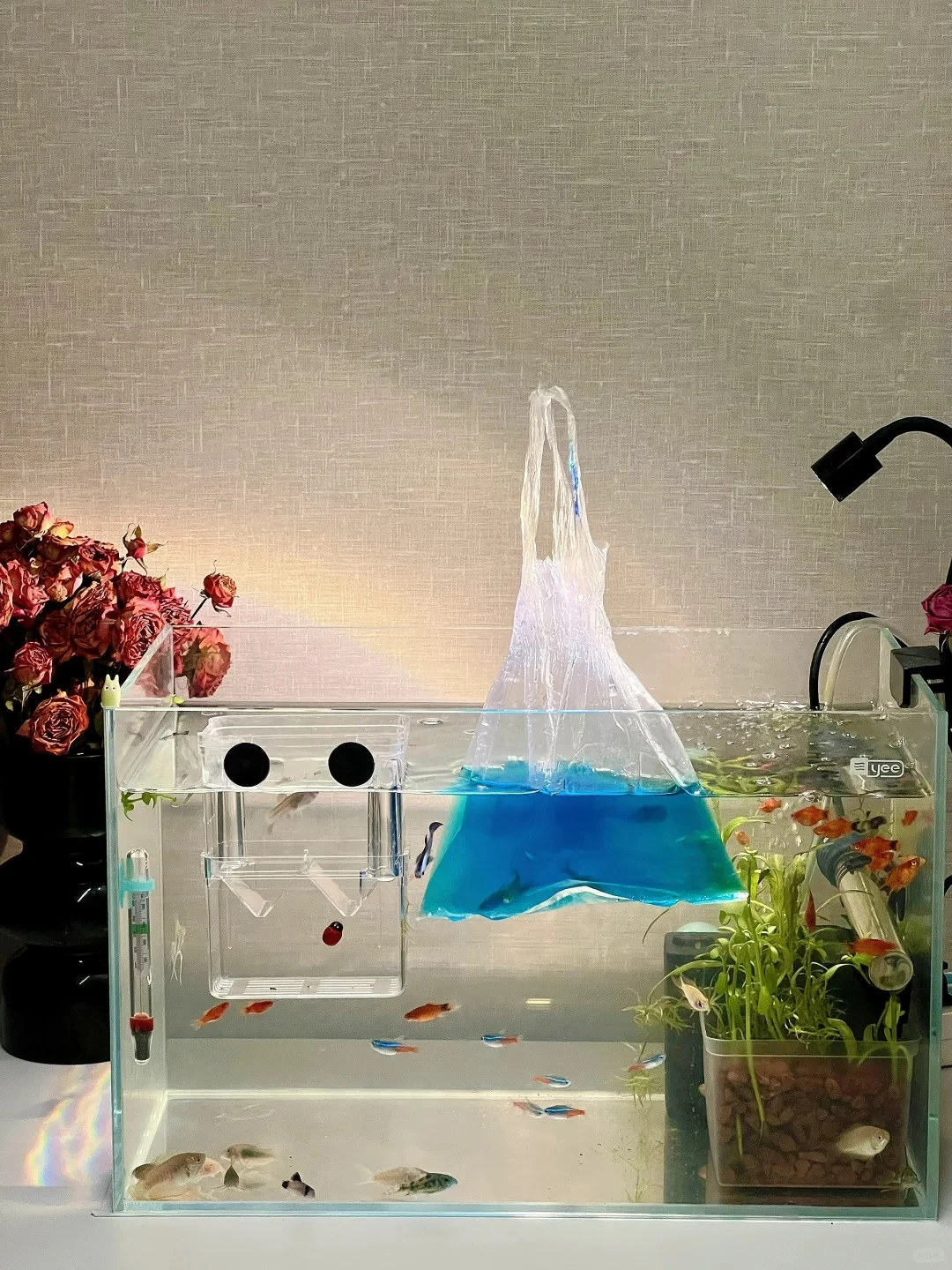
Method: Similar to disease prevention. If possible, it's best to move the sick fish to a separate tank (quarantine tank) for treatment, to avoid affecting the main tank's biofilter and other healthy fish.
A hard-earned lesson: Don't see the fish getting worse and arbitrarily increase the dose too high. Once I was impatient and tripled the dose, the result was that the already weak fish "went to heaven". It's better to go slowly, observe carefully, than to "rush and fail".
Bathing Newly Purchased Fish or Fish with Relatively Clear External Diseases (but not too severe):
Prepare a separate basin/bucket of clean water (dechlorinated).
Use about 5ml – 10ml of base solution per 1 liter of bath water. (Note: This concentration is much higher than for adding to the tank).
Place the fish in the bath for about 5 – 15 minutes. Observe the fish's reaction. If the fish shows signs of severe discomfort or strong lethargy, remove it immediately.
After the bath, remove the fish and place it back into a prepared tank (clean water, with aeration).
Real-life example: For small Koi I've just imported, I often give them a "steam bath" this way for about 10 minutes before releasing them into the holding pond. It reduces stress and disinfects quite well.
Summary Table of Suggested Dosages (Remember, this is for reference only!):
Purpose of Use
Base Solution (Garlic+MB) Dosage per 10 liters of tank water
Frequency
Notes
Regular Disease Prevention
1 – 2 ml
1-2 weeks/once
After water change.
Treating Mild Disease
2 – 4 ml
Daily (for 3-5 days)
Combine with 10-20% daily water change. Use a separate tank if possible.
Fish Bath (in separate basin)
50 – 100 ml (for 10 liters of bath water, i.e., 5-10ml/liter)
Once (5-15 minutes)
Observe fish carefully. High concentration, short duration.
Blind Spots to Avoid and Heartfelt Advice
Effect on Aquatic Plants: High doses of Methylene Blue will definitely turn plant leaves blue, even kill plants. Garlic has less effect, but concentrated garlic soak water is also not good for plant roots. For planted tanks, if used, use extremely diluted doses and monitor closely. Personally, I don't really recommend it for tanks with high-end plants.
Absolutely Do Not Use for Tanks with Sensitive Ornamental Shrimp, Snails: Both garlic and Methylene Blue can harm, even kill these invertebrates. If kept together, you must accept "sacrificing" them or move them out separately.
Always Provide Strong Aeration During Treatment: Especially when fish are sick or medication is used, the fish's oxygen demand increases.
Observe, Observe, and Observe: This is the mantra of fish keepers. Each aquarium is its own ecosystem. Fish reactions to medication also vary. You must pay close attention to the fish's behavior to adjust accordingly.
Don't Deify It: This formula is good, but it's not a "miracle cure for all diseases". It only supports effectively when combined with maintaining good water quality, a proper diet, and other environmental factors.
True story: I have a friend in Tan Binh district, Saigon, who listened to my advice and applied it strictly. His Arowana tank has been healthy ever since, and the colors have become much more beautiful. But he's also very meticulous, his water is always crystal clear, and the food is always fresh. See, it's the combination of many factors, not just this "remedy".
That's all I know and have done about this "garlic – Methylene Blue combo" that I've "spilled" out. I hope after reading this, you guys can be more confident in caring for your "little darlings" at home. Remember, patience and meticulousness are the keys to success in this demanding hobby!
The Combination of Garlic and Methylene Blue:
Although there isn't much formal scientific literature specifically researching this combination, within the fish-keeping community, using natural methods (like garlic) alongside or alternating with mild medications (like Methylene Blue) is not uncommon. The logic behind it could be that garlic helps boost internal resistance, while Methylene Blue handles external issues.
Examining Other Tricks – Between the Maze of Tips and the Secrets Few Tell
To be honest with you guys, the ornamental fish market nowadays is a mixed bag. Tips, tricks, and family secrets are all over the internet. Then shop owners, each has their own tricks to keep fish healthy and beautiful while in the store. New hobbyists who aren't alert can easily "get lost".
Other Hot Tips – Beware of Losing Money and Getting Sick
Besides garlic and Methylene Blue, there are countless other things hobbyists whisper about using:
Dried Indian Almond Leaves: Very good for conditioning fish, reducing stress, stabilizing pH, especially for Betta, Flowerhorn, Arowana lines. But must use properly processed, clean dried leaves, otherwise you'll invite more disease. There was a time I saw several online shops selling these leaves, and the price was quite steep. Those of you in the countryside with almond trees can just collect and dry them to use, cheap and good quality. A comment from a guy in Ben Tre: "Back then I didn't know, I picked fresh almond leaves and threw them into my fighting fish tank. A few days later the water got slimy and the fish got sick. Later I learned you have to use dried leaves, soaked in salt water and washed clean."
Coarse Salt: Used for mild disinfection, reducing stress during fish transport. But using it frequently or in high doses in the main tank (especially planted tanks) is not good, causing osmotic imbalance in fish and harming plants. Many shop owners often use salt to make fish look healthy when newly imported. But that's only a temporary solution.
Potassium Permanganate (KMnO4): Strong disinfectant, kills parasites, algae. But extremely toxic if overdosed, easily burns gills, damages fish skin. Must calculate dosage extremely carefully. I rarely use this, except in unavoidable situations or for tank cleaning.
Various Homemade Probiotics, Traditional Herbal Remedies: Many skilled hobbyists ferment their own probiotics from bananas, yogurt, rice bran... or have traditional herbal remedies from various leaves. Some formulas are truly effective, but many are hit or miss. The problem is the difficulty in controlling quality and composition. A small story from a forum: There was a guy who called himself a "fish doctor", advertising a miraculous homemade water from 10 types of leaves, curing all diseases. Many people believed and used it. At first it seemed effective, but after a while the fish got sicker. It turned out some ingredients temporarily suppressed immunity, making the fish appear healthy but actually weakening them. A close call for the whole community.
Trade Secrets of Shop Owners – Not Everyone Tells You
This is a bit "sensitive", but I think you guys should also know to be more "alert" when buying fish or seeking advice from shop owners.
Color Doping: Some shops use rapid color-enhancing foods or chemicals mixed into the water to make fish colors vibrant and eye-catching for display. Fish bought home, after a while without the "doping", the colors fade, even the fish weaken. Using Low-Dose "Fish-Keeping" Drugs: Many shops (especially wholesale shops or those importing large quantities) often use low-dose antibiotics or conditioning drugs mixed into the water to make fish look healthy, reducing losses during transport and storage. Fish bought home, with a change in environment and no more "backup drugs", easily get sick. This is why many hobbyists often complain "fish look great at the shop, but get sick a few days after coming home". Hiding Sick Fish: Weak or mildly sick fish are "hidden" in corners, or Methylene Blue, Acriflavine (yellow medicine) are used to spruce up their appearance. Buyers who aren't observant can easily bring home a "liability". "Lightning-Fast" Water Treatment Tricks at Shops: Many shops have "monster" filtration systems, or use specialized water treatment chemicals they don't widely share. The water at the shop always looks crystal clear, but when we try to replicate it at home using ordinary methods, it's hard to achieve.
A message for new hobbyists: When buying fish, choose reputable shops, observe the community tanks carefully, how they care for the fish. Don't chase cheap prices, don't overly trust flowery advertisements. A healthy fish is one that swims actively, eats well, has natural colors, and shows no abnormal signs on its body.
"Traps" When Reading Information Online – Staying Alert in the Jungle of Knowledge
The internet is an endless treasure trove of knowledge, but also a tangled mess if you don't know how to filter:
Google Doctor Syndrome: Seeing any symptom in fish, you hastily search online, then self-"diagnose and prescribe". This is very dangerous, because many symptoms look similar but have different causes. Unverified Information: Many tips and secrets are shared without scientific basis or long-term practical experience. One person's success doesn't guarantee another's. Seeding Disguised Ads: Many articles and comments seem to share experience but are actually advertising a certain product. You guys have to be sharp to recognize them.
Confession of a "victim": "I'm new to Koi keeping, saw someone online sharing about using neem leaves to treat fish lice. I followed suit, but who knew my Koi got drugged, floating belly up, luckily I fished them out in time. Later I learned neem leaves are very toxic, must use the correct dosage and only soak for a very short time."
Therefore, when receiving information, please:
Prioritize reputable sources: Long-standing forums, in-depth articles, shares from people with real experience.Cross-reference multiple sources: Don't just read one article and believe it immediately. See what many people say about that issue.Ask for opinions from people with direct experience: Join groups, don't hesitate to ask questions.Always start experimenting on a small scale.
In this hobby, nothing beats experiencing for yourself, summarizing for yourself. But that experience must be based on caution and continuous learning.
Golden rules etched in memory – Basic mistakes and troubleshooting tricks for fish hobbyists
For your convenience, I've systematized some basic mistakes that beginners (and even experienced hobbyists sometimes make) and quick, reasonable handling directions for each context.
Table: Summary of common mistakes and "firefighting" methods for your "beloved" aquarium
Classic Mistake
Manifestation in fish/tank
Quick troubleshooting trick
Confession from an experienced person
1. Immediately releasing newly bought fish into the tank without quarantine
New fish are weak, easily stressed, can spread disease to old fish (if any).
Quarantine new fish in a separate tank for 1-2 weeks. Monitor health. Use preventive dose (garlic+MB as instructed) if needed.
"Why be so eager to let it join the school early? If it carries pathogens, the whole gang goes down, my friend!"
2. Changing water directly from tap without treating for Chlorine/Chloramine
Fish go into shock, lose slime coat, red gills, gasping at surface, die.
Immediately change 20-30% water with treated water (aerated, dechlorinated). Strong aeration. If possible, add stress-reducing products for fish.
"Tap water nowadays is scary, not like the old days. Always carefully aerate or buy a dechlorinator bottle to be safe."
3. Overfeeding, leftover food causes pollution
Water cloudy, smells, uneaten food, fungus develops.
Stop feeding for 1-2 days. Siphon out all leftover food, debris. Change 30-50% water. Add water-treating beneficial bacteria. Reduce food amount in subsequent feedings.
"They won't die from hunger, but being overfed and dirty water makes them easy to go. Feed just enough, 2-3 times a day, each time finished within 5 minutes is good."
4. Overusing medication, especially antibiotics/Methylene Blue
Fish lethargic, poisoned by medication, develop resistance, beneficial bacteria system collapses.
Stop medication immediately. Change water gradually multiple times (20-30% each time) over several days. Strong aeration. Use activated carbon to absorb residual medication (if needed).
"Medication is a double-edged sword. Used correctly, it saves fish; used wrongly, it kills fish. Don't just throw medication at the slightest sign."
5. Cleaning filter/changing filter media incorrectly
Beneficial bacteria lost, water turns cloudy again, fish stressed.
Only clean filter floss using water siphoned from the tank. Do not wash filter media (ceramic rings, lava rock) with tap water. Change filter media gradually, not all at once.
"That filter unit is the heart of the tank. Lots of beneficial bacteria live in there. Washing it too clean is a disaster."
6. Fish density too high for tank size
Fish lack oxygen, often fight, water gets dirty quickly, prone to disease.
Reduce number of fish. Upgrade to a larger tank. Enhance filtration system and aeration.
"How can you live in a cramped house with too many people? Fish are the same. Greed leads to loss!"
7. Neglecting to monitor water parameters (pH, NH3/NO2…)
Fish get sick gradually without clear cause, chronic stress.
Equip a basic water test kit. Check periodically (especially when fish show abnormal signs or after major changes in the tank).
"Keeping fish without knowing the water condition is like a fortune teller feeling an elephant. Investing in a test kit costs little but is very effective."
These are just the most common mistakes. There are hundreds of other "oh my god" things that can happen to our aquariums. The important thing is to keep a cool head, calmly find the cause, and don't hesitate to ask experienced people. Our community is always willing to share, right?
FAQ – Fish hobbyists ask, veterans answer (Sharp questions, direct answers, not afraid of conflict)
I've gathered some classic questions that you guys often wonder about, especially newcomers. Answering in a real-person, real-matter style, telling it like it is, no embellishment, no frills.
1. Question: I just bought new fish, do I need to use garlic and Methylene Blue to prevent disease right away, or wait until they show signs? I'm afraid using it too early will make them "resistant to medication."
Answer: Hello, this is a good question, exactly the psychology of many new hobbyists. In my experience, "prevention is better than cure" is always the truth. For newly bought fish, they have just gone through stressful transportation, sudden environmental change, weakened immunity, so they are very prone to infection.
Quarantining new fish and using a light preventive dose with the garlic + Methylene Blue combo (according to the preventive dose instructions I shared above) is RECOMMENDED. The main purposes are:
Light disinfection: Eliminate some potential pathogens that may be on the fish from the old environment or during transport.
Support stress reduction, boost initial immunity: Garlic has this effect.
Monitoring: During quarantine (1-2 weeks), if the fish get sick, you detect and treat early, not spreading to the main tank.
As for "medication resistance"? With Methylene Blue, if you use high doses continuously, it's true that bacteria/fungi can develop resistance. But with a light preventive dose, periodically, and combined with garlic (a natural substance with a more complex mechanism), the risk of "resistance" is very low. More important is the misuse of medication when unnecessary or using the wrong dose when fish are already seriously ill.
In short: For new fish, confidently give "them" a gentle preventive course in the quarantine tank. Much more peace of mind, my friend. Consider it a "house entry procedure" for them. Don't wait until "the water reaches your feet before jumping," by then it might cost much more in medication, and the fish are weak, losing the fun.
2. Question: I see many people say using Indian almond leaves is very good, can it completely replace garlic and Methylene Blue? My tank has ornamental shrimp so I'm a bit hesitant to use Methylene Blue.
Answer: Ah, another follower of "natural products" here! Dried Indian almond leaves are indeed a "treasure" for fish hobbyists, especially for fish that prefer soft water, slightly low pH like Bettas, small South American fish. Its main function is releasing tannins, humic acid which help:
Soften water, reduce stress for fish.
Have mild antibacterial, antifungal properties (but not as strong as Methylene Blue or some specific medications).
Stabilize pH, create a beautiful tea-colored water.
Some fish even nibble on the leaves as a supplementary food source.
So can it completely replace garlic and Methylene Blue? I'd like to answer DIFFICULT. Each has its own strengths:
Indian almond leaves: Mainly for nurturing fish, light disease prevention, improving water environment. Very safe for ornamental shrimp.
Garlic (combined with very light MB dose or no MB): Also has disease prevention effects, boosts internal immunity, but mechanism differs from Indian almond leaves. If using only diluted garlic-infused water, with little or no MB, it's also quite safe for shrimp (but must test with extremely low dose first).
Methylene Blue: Strong in killing fungus, disinfecting when fish already show clear signs of illness or need quick disinfection. Absolutely should not be used in tanks with sensitive ornamental shrimp.
Advice for you:
If your tank has shrimp, and you want to prioritize natural solutions, dried Indian almond leaves are a very good choice for regular water conditioning and light disease prevention.
You can experiment with HIGHLY DILUTED garlic-infused water (without Methylene Blue) to supplement for fish, but must closely monitor shrimp's reaction. Start with extremely small amounts.
When fish (not shrimp) in the tank show signs of illness requiring Methylene Blue, MUST move sick fish to a separate tank for treatment, do not use Methylene Blue directly in the tank with shrimp.
In summary, there's no "miracle cure" that can replace everything. Understand the function of each and combine them wisely, depending on the actual situation of your tank and its inhabitants. Keeping fish with shrimp means accepting to "pamper" a bit more, my friend.
3. Question: The garlic-infused water I made has a quite strong smell, I'm afraid the fish will go into shock. Is there a way to reduce the smell while keeping the effect? How long can the prepared garlic + Methylene Blue solution be kept in the refrigerator?
Answer: This is very practical, many guys also worry about the smell.
About garlic smell: It's true that fresh garlic just crushed or soaked initially has a quite strong smell. If you use garlic that has been crushed/minced and soaked in clean water for about 12-24 hours at room temperature, then filter to get the extract, the smell will be significantly milder compared to directly pressed fresh garlic juice.When you dilute this stock solution into the fish tank with preventive dose (1-2ml per 10 liters of water), the garlic concentration in the tank is extremely low, the fish are almost not affected much by the smell, it even has a mild olfactory stimulating effect.
If you still find it too strong, you can:Reduce the amount of garlic when initially soaking (e.g., 1-2 small cloves for 200ml water).After soaking, let the filtered garlic water sit out for a few more hours to let the smell dissipate before adding Methylene Blue.Divide the dose, instead of adding once, divide into 2-3 times a few hours apart. Personally, I find the faint smell of garlic (when diluted) is not a big issue, many fish even seem to like it. Important is not to use overly concentrated garlic extract.
About storing the prepared garlic + Methylene Blue solution:This solution is best used within the day or maximum 2-3 days if kept at room temperature and away from direct sunlight. Garlic-infused water is very prone to fermentation or other bacterial contamination if kept long, reducing effectiveness and potentially harmful.If you want to keep it a bit longer, you can store in the refrigerator, tightly sealed. With this method, it can be kept for about 3-5 days, even a week if utensils are very clean. Before use, take out to reach room temperature before adding to the tank.However, my sincere advice is it's best to make just enough for short-term use (1-3 days). Fresh is still better. The preparation process isn't too complicated, be a bit diligent for the safety of your "darlings".
Remember, don't be lazy and use "expired" stuff, lest "firefighting turns into burning the house"!
4. Question: I heard Methylene Blue kills beneficial bacteria in the tank. So when using this garlic + Methylene Blue combo for prevention, do I need to add more beneficial bacteria? Or is there a way to limit the impact on beneficial bacteria?
Answer: This is a completely legitimate concern! It's true that Methylene Blue has broad-spectrum antibacterial properties, it doesn't "discriminate" between harmful bacteria and beneficial bacteria (beneficial bacteria in the filtration system).
Impact on beneficial bacteria: If you use Methylene Blue with high doses, or use directly in the main tank to treat severe illness for a long time, the beneficial bacteria system will definitely be seriously affected, may even "collapse." Then the water will turn cloudy, toxic parameters like NH3, NO2 spike.With the preventive dose of the garlic + Methylene Blue combo that I instruct (1-2ml stock solution per 10 liters of water), the actual amount of Methylene Blue entering the tank is very small. Its impact on the beneficial bacteria system will be much less compared to using pure Methylene Blue at high doses. The garlic in this combo does not harm beneficial bacteria.
How to limit impact and supplement beneficial bacteria: Prioritize treatment in a separate tank (quarantine/hospital tank): This is the best way to protect the main tank's beneficial bacteria colony. Whenever fish show signs of illness requiring medication (including this combo for treatment), move the fish to a separate tank. Use the correct preventive dose: If using for periodic disease prevention in the main tank, strictly adhere to the extremely low dosage as instructed. At this concentration, many healthy bacterial colonies can still withstand it or recover quickly. Drip the solution into the filter outflow: If possible, slowly drip the diluted solution directly after the final filter compartment (where water flows back into the tank). This helps the solution mix evenly and minimizes direct high-concentration contact with the entire filter media mass where most beneficial bacteria reside. However, this method is only relatively effective. Supplement beneficial bacteria after medication (if deemed necessary): After a preventive treatment cycle, or if you feel the water is slightly unstable, adding a dose of high-quality beneficial bacteria 1-2 days later is a good idea. It helps reinforce the bacterial colony, ensuring water stability returns quickly. Especially if you used a treatment dose (even in a separate tank), after the fish recover and are returned to the main tank, supplementing beneficial bacteria for the main tank is also highly recommended. Do not use concurrently with activated carbon during treatment: Activated carbon will absorb the medication, reducing its effectiveness.
In summary: Better safe than sorry. When using anything with antibacterial potential in the main tank, think of the beneficial bacteria. Use the lowest effective dose, prioritize a separate tank for treatment, and be ready to support the beneficial bacteria if needed. A healthy beneficial bacteria colony is the strongest "shield" for your aquarium.
Weekend Chat Corner – Gather 'round, share and debate for fun!
Well, I've been spitting out pearls of wisdom in one go, quite a bit, folks. All the passion, the "blood and sweat" experience regarding this garlic and Methylene Blue thing, I've poured my heart out. I hope these shares will be somewhat helpful for everyone, especially newcomers still fumbling to find the way to "save fish."
Honestly, every time I see my fish swimming happily, healthy, with vibrant colors, my heart feels an indescribable joy. The feeling of personally caring for, successfully treating my "little ones" is more "thrilling" than anything. But to achieve that, one must be diligent in learning, observing, and not afraid to experiment (within safe limits, of course!).
This "secret recipe" of garlic – Methylene Blue, I'm sure many other "old-timers" also know, or have even better variations. Therefore, I really look forward to receiving shares, feedback, even "critiques" from everyone. Who knows, from everyone's comments, we might discover new formulas, better, more effective methods for our Vietnamese ornamental fish community.
Anyone who has applied this method, please give me some real reviews? Any difficulties encountered? What were the results? Does anyone have any interesting "variations" with garlic and Methylene Blue? Share for everyone to learn! Or if anyone has any "hopeless cases," tried this method without success, feel free to send the case here, and we can all consult together.
The forum is home, we are one family. Feel free to chat away, as long as it's fun and beneficial for each other! Don't hesitate to enlighten this younger brother if I've said anything incorrect or insufficient!
Expansion Suggestions – Other hot tips and topics for fish addicts
Talking about ornamental fish is truly a "maze," the deeper you go, the more interesting nooks and crannies you find. Besides the garlic – Methylene Blue "combo," there are a million other things we can explore and discover to improve our "skills."
Self-medication testing and perfect tank cleaning hacks
How to safely "test medication": When wanting to try a new type of leaf, a strange "folk remedy," or a new product on the market, the GOLDEN RULE is:
Research thoroughly: Read reviews, ask for opinions from users, check ingredients (if available).Start with an extremely low dose: Much lower than the recommended dose (if any).Test on 1-2 cheap, healthy fish in a separate tank: Absolutely do not test directly on valuable fish or the whole school.Observe closely for at least 24-48 hours: Watch for any abnormal signs.Increase the dose gradually (if it seems okay): Increase a little each time and observe again.
Mini-story connection: Remember when I experimented with guava leaves to treat intestinal disease in fish. Heard the elders say it was great, but I was still careful, took a few young leaves, crushed them lightly, put them in a small tank with a few "guinea pig" guppies. At first, they seemed a bit "confused," but after a few hours, they were normal. I monitored for a whole week, saw the fish were still healthy, feces looked good. Only then did I dare to gradually increase the leaf amount and apply it to larger fish. Being careful is never excessive!
Tips for effortless yet effective aquarium cleaning:
DIY gravel vacuum: Use a soft plastic tube, one end attached to a cut plastic bottle (the part with the bottle mouth) as a suction funnel. Cheap and convenient.
Magnetic aquarium glass cleaner: This is familiar, but remember to choose one with appropriate magnetic strength for your glass thickness.
No need for full tank cleaning too often: Just perform regular water changes (10-30% per week depending on fish density and tank size), vacuum the substrate. "Turning the whole tank upside down" for scrubbing should only be done when truly necessary (e.g., severe algae infestation, or after a major disease outbreak). Because doing so will disrupt the stable beneficial bacteria colony.
Smart algae management: Reduce lighting: Harmful algae often bloom due to excess light.
Use safe algae control products (if needed): But must read instructions carefully and use the correct dose.
Other "little-known" practical tips and a wake-up call story
The importance of quarantining new fish: Mentioning it again because it's TOO IMPORTANT. Many folks are negligent and skip this step, only to "pay the price" with their entire existing school. Consider it the "unwritten law" of professional fish keepers. Feed fish a varied diet: Don't just feed one type of pellet. Supplement with live food (bloodworms, daphnia, brine shrimp, small shrimp…) or vegetables (cucumber, lightly boiled carrot – depending on fish species) so fish get enough nutrients, develop better color, and are healthier.
Understand the Nitrogen Cycle: This is the CORE knowledge of fishkeeping. Understanding it, you'll know how to keep tank water always safe for fish. Take the time to learn about Ammonia (NH3), Nitrite (NO2), Nitrate (NO3) and the role of beneficial bacteria. Trust me, when you "grasp" this, your fishkeeping skills will reach a new level.
Mini-story "wake-up call": In the past, I was like many others, constantly changing water, using all sorts of medications, but fish still got sick. Until an "old master" on the ABV forum patiently explained the Nitrogen Cycle and the importance of "cycling" a new tank to me. It was like an awakening! From then on, I started focusing more on cultivating beneficial bacteria, stabilizing the filter system. The result was much healthier fish, clearer water, and I also had much less work. It was a real turning point.
Fishkeeping is a journey of continuous learning. Each passing day, each new batch of fish, each incident is a lesson. Don't be afraid of failure, because it's from failure that we gain the most valuable experience.
Conclusion from the bottom of the tank: "Being addicted to fish is a fate, keeping the passion alive is the real skill!"
Time flies, and I've chatted a long string with everyone. From the face-plant failures when starting out, the times of tinkering and trying all sorts of "heaven and earth" things, to finding little "secret recipes" that make fish care less arduous, multiplying the joy. The combined formula of garlic and Methylene Blue I'm sharing today is actually just a very small part of the vast knowledge in this elegant yet meticulous hobby.
I know, many folks after reading might find it too simple, or some might find it a bit "unscientific." But for me, anything stemming from reality, verified over time, bringing positive results for the very fish I love, that is my own "truth." And I want to share that "truth" with all who share the same passion.
What value can you gain from this sharing?
A more PRACTICAL and INSIGHTFUL perspective on common issues when keeping ornamental fish in Vietnam, especially regarding water and disease. A COMBINED SOLUTION between natural elements (garlic) and familiar chemicals (Methylene Blue) in a SAFER and MORE EFFECTIVE way to prevent and treat some basic fish diseases. "BLOOD AND SWEAT" EXPERIENCES summarized not only from myself but also from many in the community, helping you avoid unnecessary mistakes. More importantly, I hope it sparks a SPIRIT OF EAGERNESS TO LEARN, SELF-EXPLORATION, AND ATTENTION TO DETAIL, PATIENCE – indispensable qualities of a genuine ornamental fish keeper.
Why should you try this method and trust community experience?
Because it's CHEAP, EASY TO DO, RELATIVELY SAFE (if done correctly) and has been PRACTICALLY VERIFIED by many like me to be effective. In a "maze" of expensive medications and products on the market, a "homegrown" solution like this can sometimes be an unexpected "lifesaver." The community is where knowledge is shared and multiplied. One person cannot know everything, but many heads together, nothing is impossible.
If anyone has any further questions needing answers, or wants to share your own fishkeeping story, don't hesitate to leave a comment below, or "inbox" me directly. I don't dare claim to be any "expert," just someone who went ahead, willing to share what I know. Because I believe the greatest joy for fish keepers isn't just admiring beautiful fish, but also connecting and sharing passion with like-minded people.
Wishing everyone always keeps the "fire" for your underwater "spiritual children," and may everyone's aquarium always be full of happy "tail-wagging"! See you all in other "chatty" topics!